
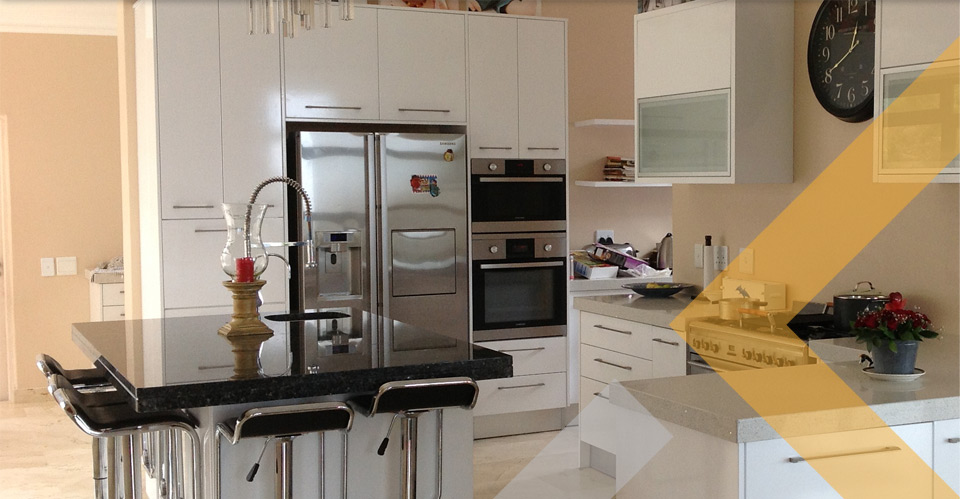
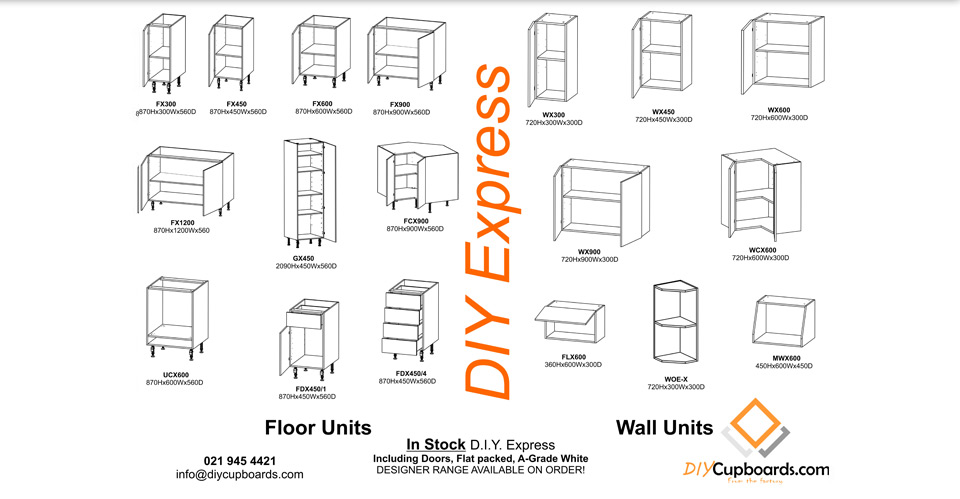

29 May What Is a Kitchen Cupboard Carcass?
If you have ever spent time researching kitchen renovations or flat pack cupboards, you will likely have come across the word “carcass.” It is one of those terms that gets used freely in the industry but is rarely explained.
Understanding what a carcass is, and what makes a good one, is genuinely useful when you are comparing kitchen units and trying to make a confident purchasing decision.
The Simple Definition
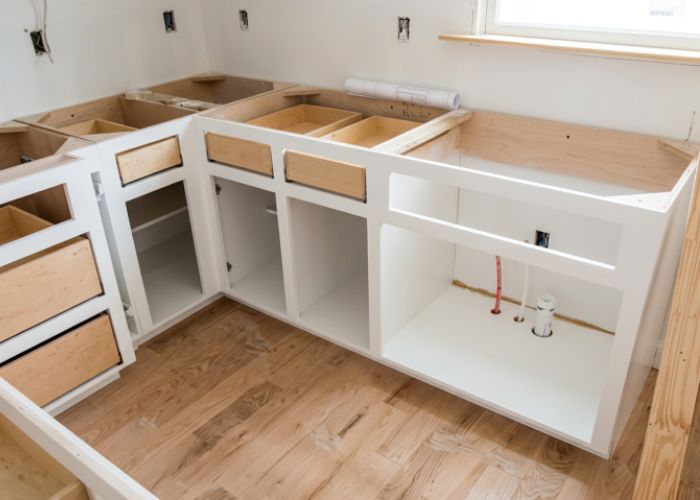
A cupboard carcass is the structural box that forms the body of a kitchen unit. It is the shell: the sides, top, bottom, and back panel, before any doors, drawers, or hardware are attached.
Think of it as the skeleton of the cupboard: everything you eventually see on the outside is added to or fitted onto the carcass.
In a flat pack kitchen, the carcass is what you assemble first. The doors are then hung from it, the hinges clip in, the legs are adjusted underneath, and the unit is fixed to the wall or floor. The carcass is the foundation on which all of that depends.
What Is a Carcass Made From?
In modern kitchen manufacturing, carcasses are almost universally made from melamine-faced board; a composite panel (typically chipboard or MDF) with a melamine surface bonded to both faces. The melamine layer gives the board its colour, its cleanable surface, and its resistance to moisture and everyday wear.
The quality of the board used for the carcass matters considerably. A-grade boards are manufactured to a consistent density and thickness, which means the panels cut cleanly, join accurately, and hold fixings reliably over time. Lower-grade boards can vary in density, which leads to fixings working loose, panels bowing, and joins that do not stay tight.
At DIYCupboards.com, we use only A-grade boards across our full range, it is one of the details that determines how long a kitchen holds up in daily use.
The thickness of the carcass panels also matters. In quality kitchen units, 16mm or 18mm board is standard. Thinner panels are a common way to reduce manufacturing costs, but they result in a carcass that flexes under load and does not hold hinges and drawer runners as securely.
How Is a Carcass Joined Together?
The method used to join the carcass panels is one of the clearest indicators of build quality. Our units use a cam and dowel system — a joinery method where a cylindrical cam fitting in one panel locks onto a dowel peg in the adjacent panel when turned.
This creates a strong, tight joint without requiring glue or specialist tools, and it is what makes flat pack assembly both practical and structurally sound.
Cheaper units sometimes use staples, nails, or simple butt joints with screws driven directly into the face of the board. These methods are faster to produce but result in joints that loosen over time, particularly in a kitchen environment where humidity, heat, and vibration are constant factors.
The Back Panel
The back panel of a carcass is often overlooked, but it plays an important role. A solid back panel keeps the carcass square; without it, the box can rack or twist over time, causing doors and drawers to sit unevenly. It also provides a surface to run cables or pipes behind, and in wall units, it is what the unit hangs from.
In quality carcasses, the back panel slots into a rebate or groove cut into the sides, top, and bottom, making it an integral part of the structure. In cheaper units, the back panel is sometimes simply tacked onto the rear of the box, which provides far less rigidity.
Legs and Hanging Brackets
Once the carcass box is assembled, it needs to be levelled and fixed in place. Floor units sit on adjustable plastic legs, which allow the unit to be raised or lowered to achieve a perfectly level run of cupboards even on an uneven floor. The legs are waterproof, which matters in a kitchen where water can find its way to the floor. The plinth panel that runs along the base hides the legs once everything is in position.
Wall units use adjustable hanging brackets that fix to the back panel and hook onto a wall-mounted rail or anchor plate. This system allows you to adjust the unit left, right, and in depth after it is on the wall, which is essential for getting a perfectly level, straight run of cupboards.
Our FAQ page covers common questions about both floor and wall unit installation in more detail.
Carcass vs. Door: Where the Visible Finish Comes From
It is worth noting that the exterior appearance of most kitchen cupboards comes almost entirely from the doors and panels, not the carcass itself. The carcass is largely hidden once the kitchen is installed, it sits behind closed doors, under the worktop, or against the wall.
This is why a good quality carcass does not need to look beautiful; it needs to be structurally sound, accurately made, and built to handle years of use.
The doors are where your finish choice, colour, and style come through. At DIYCupboards.com, we manufacture both PVC wrap doors and impact-edged melamine doors, both of which fit our standard carcasses. This is also why it is important to avoid common mistakes when installing DIY cupboards, errors during carcass assembly affect how everything attached to it sits and functions.
Why It All Starts With the Carcass
When you are comparing kitchen units, it is worth looking past the door finish and asking questions about what is inside: what board grade is used, how the joints are made, and whether the legs and hanging hardware are adjustable.
A beautiful door on a poor-quality carcass is a short-term fix. A well-made carcass with good hardware is a kitchen that will serve you reliably for many years. Browse our full range in the online shop, or visit one of our Cape Town showrooms to see the construction quality for yourself.
PLAN YOUR KITCHEN
Browse the range or get help from a designer
Standard-size flat-pack units priced factory-direct, plus free 3D design help if you want a custom layout.
Browse the shop Talk to a designer
Factory-direct prices · Nationwide delivery · 4.6★ on Google
Sorry, the comment form is closed at this time.