
07 Apr DIY Cupboards That Look Like Pro Installations
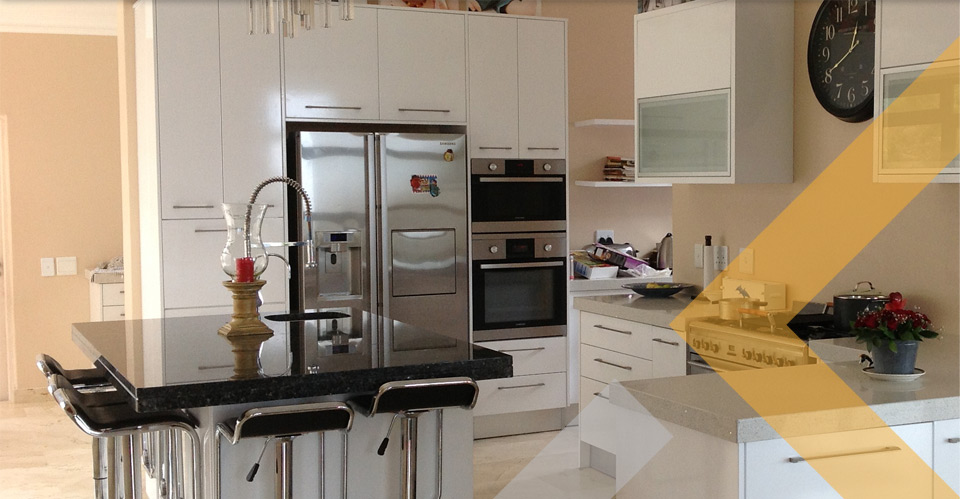
One of the biggest concerns people have about installing their own upboards is that the result will look, well, DIY. Slightly off. A little rough around the edges. The kind of thing a professional would clock immediately and a guest would politely ignore.
Here’s the truth: the difference between a DIY installation that looks amateur and one that looks like it was done by a seasoned professional almost never comes down to the cupboards themselves. It comes down to the finishing details.
Get those right, and your kitchen will be virtually indistinguishable from a high-end professional fit-out, at a fraction of the cost.
At DIYCupboards.com, we supply everything you need to achieve that polished, professional result yourself. Here’s how to do it.
Start with Accurate Measurements and a Solid Plan
No finishing detail in the world can compensate for poor planning.
A professional-looking installation starts long before you pick up a drill. It starts with precise measurements and a well-thought-out layout.
Measure your space carefully, accounting for any irregularities in walls, floors, and ceilings. Older homes in particular often have walls that aren’t perfectly straight or floors that aren’t perfectly level and a professional installer accounts for these from the start rather than discovering them mid-installation.
Sketch your layout to scale, confirm your appliance dimensions, and plan where each unit will sit before you order a single item.
Our guide on how to prepare your space before installing cupboards walks you through this process in detail; it’s an essential read before you begin.
Use Filler Panels to Eliminate Gaps
Nothing gives away an amateur installation faster than visible gaps between cupboards and walls, between units and ceilings, or at the ends of a run of cabinetry. Professional installers eliminate these gaps using filler panels, and so can you.
Filler panels are slim strips of matching material that bridge the space between your last cupboard unit and an adjacent wall or obstruction.
They’re cut to fit precisely, finished to match your cabinetry, and when fitted correctly, they make the entire installation look seamless and intentional.
The key to a convincing filler panel is cutting it accurately and ensuring it sits flush with the cupboard face. Take your time with this step a well-fitted filler panel is invisible, and that invisibility is exactly the point.
Browse our kitchen cupboard accessories to find the right filler panels for your installation.

Choose the Right Handles and Place Them Consistently
Handles are one of the smallest components in a kitchen and one of the most visually powerful. The right handle choice elevates the entire look of your cabinetry, and consistent placement across every door and drawer is what separates a professional finish from a home job.
When selecting handles, think about the overall style you’re going for. Sleek bar handles in brushed steel or matte black read as modern and contemporary. Cup handles or knobs in brass or antique finishes suit traditional or farmhouse-style kitchens.
Whatever you choose, commit to one style and finish throughout mixing hardware is one of the quickest ways to make a kitchen look unplanned.
Placement consistency is equally important. Professional installers use a jig, a simple template that ensures every handle is drilled at exactly the same position on every door and drawer. You can buy a handle jig or make your own from a piece of scrap board.
It takes a few minutes to set up and saves hours of measuring, while guaranteeing a result that looks precise and deliberate.
Explore our range of cupboard handles and hardware to find the perfect finishing touch for your kitchen.
Add a Splashback for a Finished, Cohesive Look
A splashback is one of the most transformative additions to any kitchen and one that instantly signals a complete, considered installation.
Without one, even beautifully installed cupboards can look unfinished. With the right splashback, the whole kitchen comes together.
The options are wide: classic ceramic tiles, easy-to-clean glass panels, bold patterned tiles, or simple subway tiles that complement almost any cabinetry style.
The choice you make should reflect the overall aesthetic of your kitchen: a high-gloss white cupboard finish pairs beautifully with a clean glass or metro tile splashback, while a woodgrain or warm-toned kitchen might suit an earthy, textured tile.
From a practical standpoint, the splashback should run from your countertop to the bottom of your wall cupboards, covering the full working zone behind your stove and sink. Neat, straight grout lines or seamless panels are what give the professional look.
Take care with your cutting and levelling here, and the result will speak for itself.
Finish the Top of Your Wall Cupboards with Cornice or Pelmet
One detail that professional kitchen installers rarely skip and DIYers often overlook is the cornice or pelmet that runs along the top and bottom of wall-mounted cupboard units.
Cornice is the decorative moulding fitted along the top of your wall cupboards where they meet the ceiling. It conceals any gap between the top of the unit and the ceiling, ties the cabinetry into the room architecture, and gives the installation a built-in, furniture-quality feel.
Pelmet is the equivalent trim along the bottom of wall units. Beyond aesthetics, it’s also the element that conceals under-cabinet lighting, another professional touch that dramatically improves both the look and the functionality of your kitchen.
These finishing mouldings are available to match our cabinetry ranges and are straightforward to fit once your units are in place. Find the right options in our kitchen cupboard finishing accessories range.
Ensure Your Doors and Drawers Are Perfectly Aligned
Ask any professional kitchen installer what they spend time on at the end of a fit-out, and the answer is almost always the same: adjusting doors and drawers. Getting every door to hang at exactly the same height, with even reveals between panels, and every drawer to close smoothly and sit flush is what a polished kitchen looks like.
The good news is that modern soft-close hinges and drawer runners make this adjustment straightforward. Most quality hinges have three-way adjustment; you can move the door up and down, in and out, and side to side allowing you to dial in a perfect alignment without removing and refitting anything.
Take the time to go door by door once everything is fitted, checking for consistency in the gaps and making small adjustments as needed. It’s a satisfying final step that has an enormous impact on the overall result.
The Professional Finish Is in the Details
A professional-looking DIY kitchen installation comes down to a handful of key principles: accurate planning, seamless gap-filling with filler panels, consistent hardware placement, a well-chosen splashback, proper cornice and pelmet finishing, and careful door and drawer alignment. None of these are beyond a capable DIYer they simply require patience, the right materials, and attention to detail.
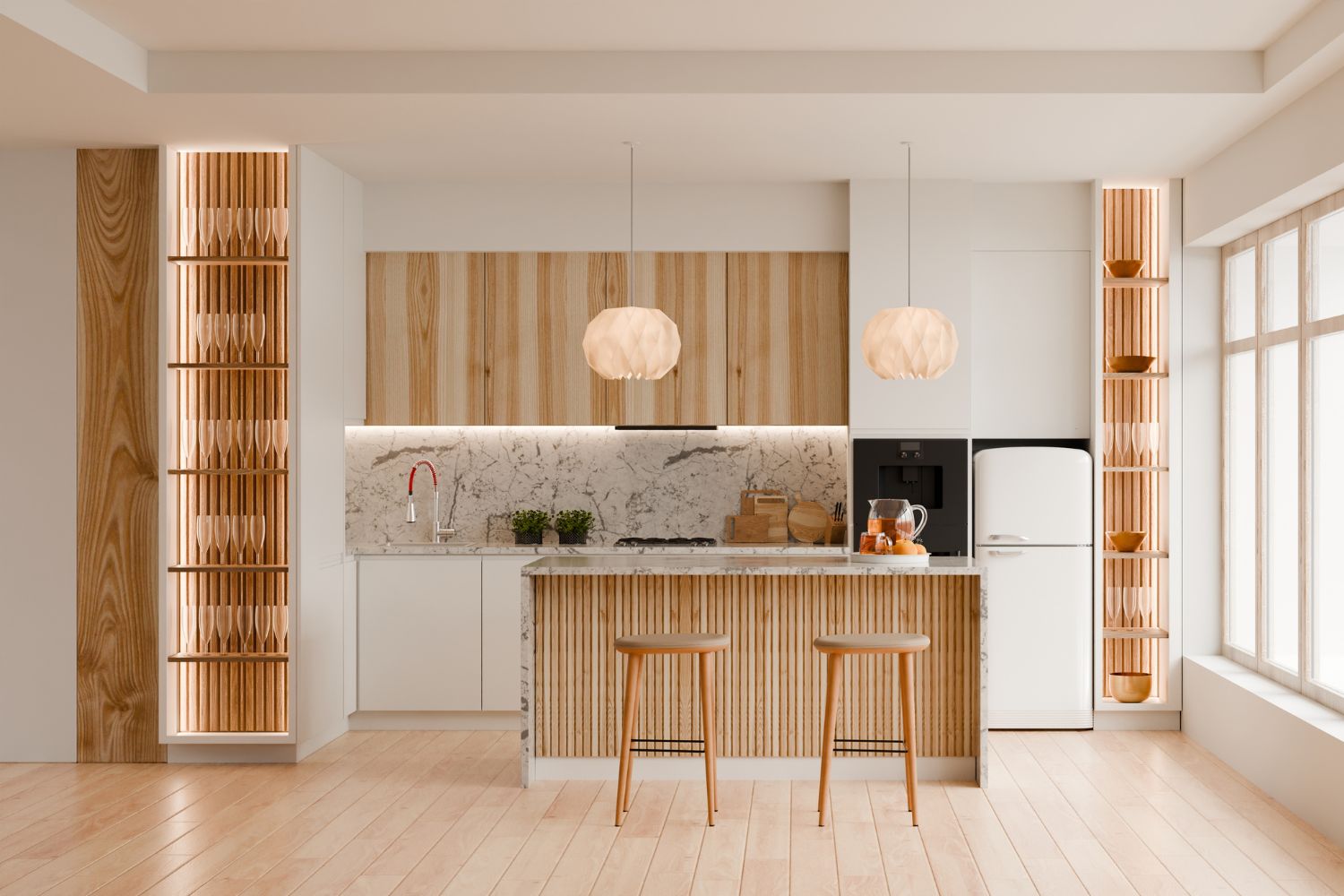
For more inspiration on achieving a high-end finish at home, here are some kitchen makeovers from pros. At DIYCupboards.com, we supply a full kitchen range, not just the cabinetry but all the finishing components you need from filler panels and handles to cornice, pelmet, and hardware.
Browse the range or get help from a designer
Standard-size flat-pack units priced factory-direct, plus free 3D design help if you want a custom layout.
Browse the shop Talk to a designer
Factory-direct prices · Nationwide delivery · 4.6★ on Google
Sorry, the comment form is closed at this time.